
WHY OUR KITTENS ARE RAISED THE WAY THEY ARE
Responsible breeding does not have one look. For me, raising kittens means balancing socialization with health, safety, licensing requirements, experience, and the responsibility families place in me when they reserve one of my babies.
By Aubre Barnhart
Aub’s Maine Coons
THE PICTURE PEOPLE HAVE OF A “GOOD BREEDER”
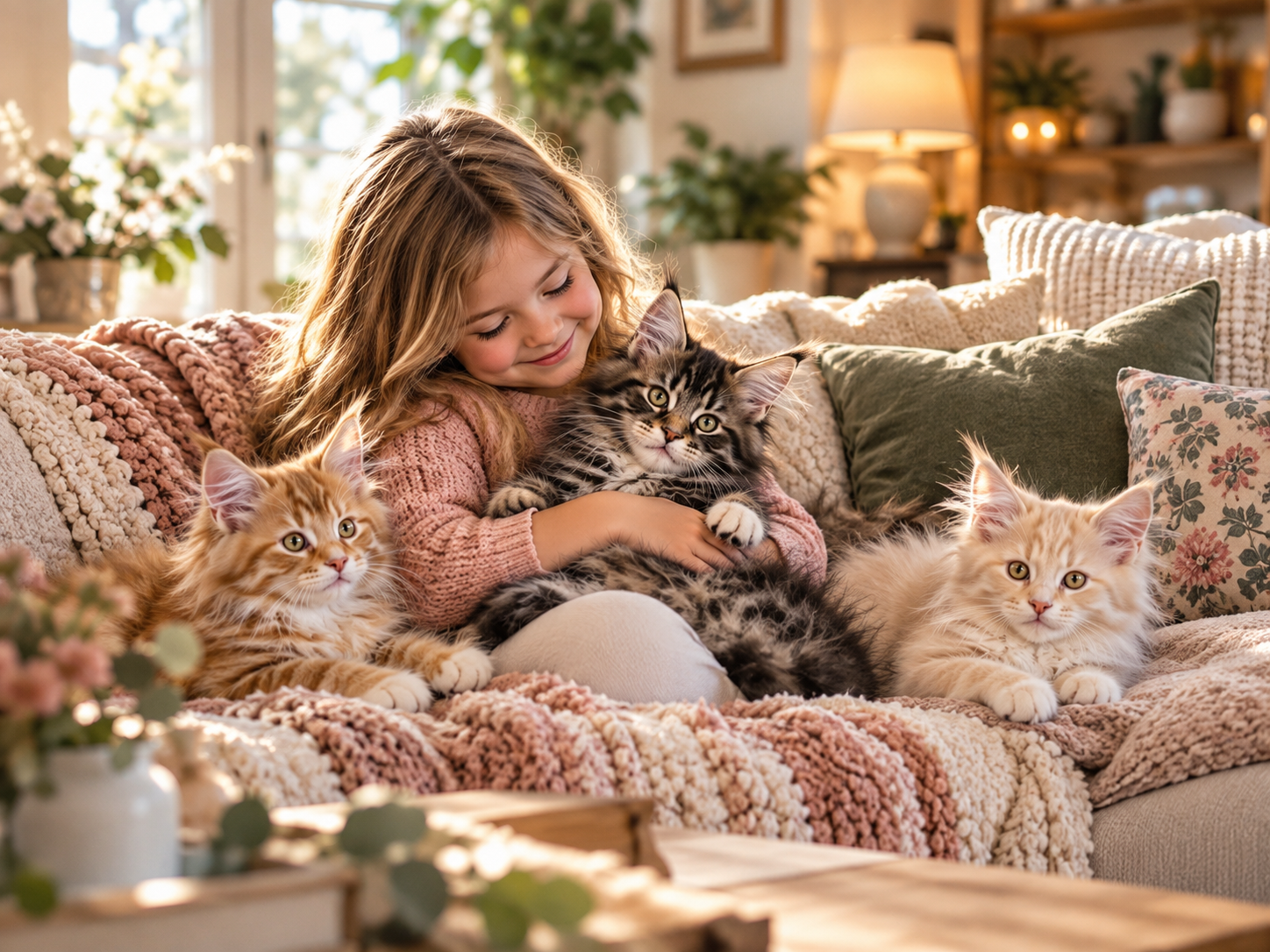
There is a very specific image of breeding that has become popular on social media. Kittens sleeping in someone’s bed, babies running through the living room, children carrying kittens around the house, and a kitten curled up beside someone while they work all create a warm and appealing picture. It is sweet, it photographs beautifully, and for some breeders it works wonderfully.
But it is not the only way to raise happy, healthy, well-socialized kittens. The more I have watched conversations about breeding online, the more I have realized how easily people can begin to confuse a particular lifestyle or aesthetic with responsible breeding itself. Every breeder has a different family, home, program, number of animals, level of experience, set of regulations, and physical environment to consider. What works perfectly in one home may be impractical, unsafe, or even prohibited in another.
Responsible breeding should ultimately be measured by the care being provided, not by whether someone’s home looks like the version of breeding people find the most romantic.
WHEN LICENSING CHANGES HOW YOU OPERATE
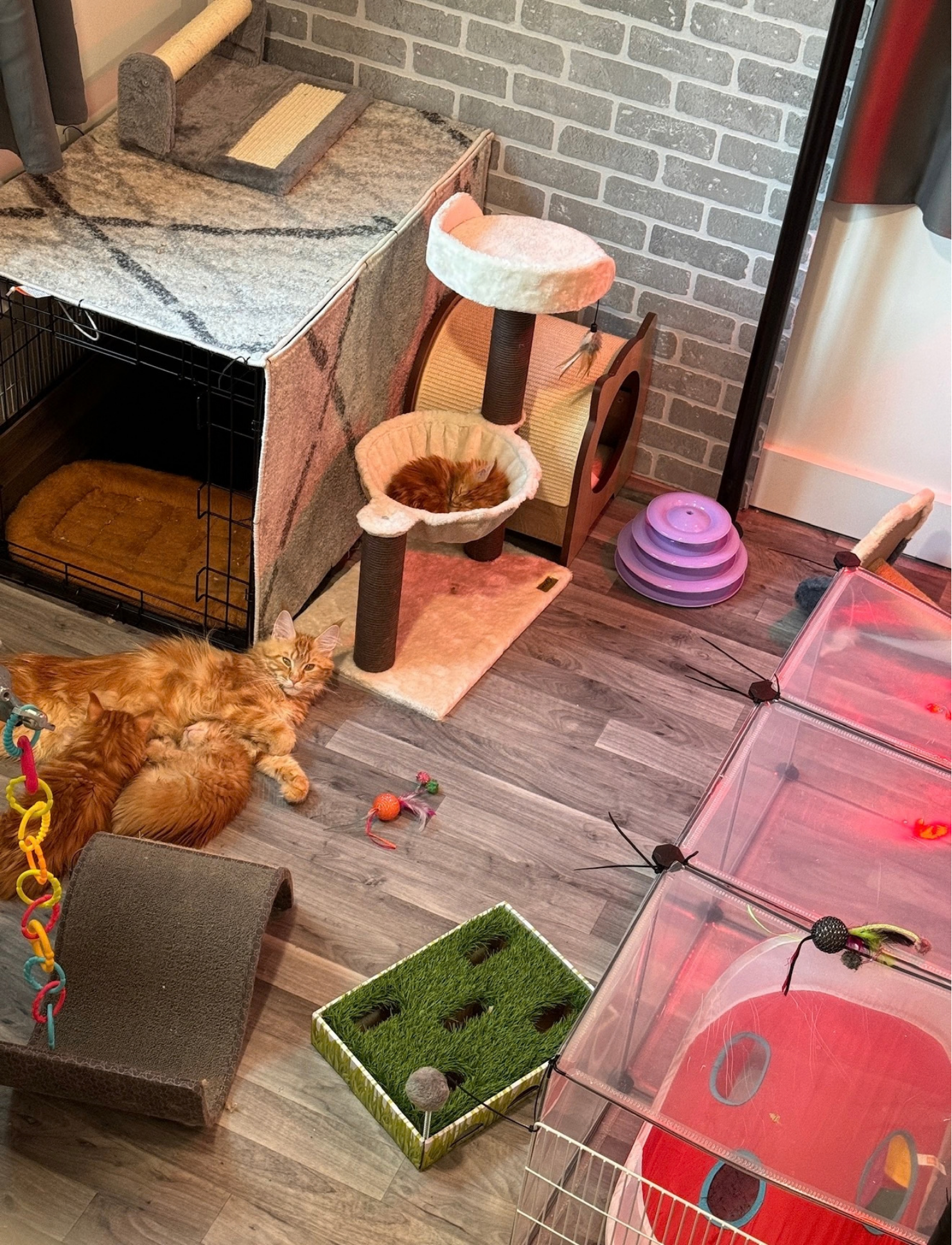
One part of breeding that many families never see is regulation. Licensing requirements vary depending on where a breeder lives, but once you are operating under a state license, there can be very specific standards governing how animals are housed and managed. Those standards are not optional simply because another way of doing things might look more appealing from the outside.
In my program, litters have to be appropriately separated, intact males and females cannot simply live together, and a queen with her kittens cannot just be running around with family pets. There are also standards involving sanitation, housing, records, veterinary care, animal identification, inspections, and the overall management of the animals in my care.
When someone sees a breeder operating in a more structured way, that structure should not automatically be interpreted as a lack of affection or socialization. Sometimes structure is simply what responsible and legally compliant animal care looks like. Following rules does not mean loving kittens less, sanitation does not mean kittens are unsocialized, and running a professional breeding program does not mean the animals become numbers.
One part of breeding that many families never see is regulation. Licensing requirements vary depending on where a breeder lives, but once you are operating under a state license, there can be very specific standards governing how animals are housed and managed. Those standards are not optional simply because another way of doing things might look more appealing from the outside.
In my program, litters have to be appropriately separated, intact males and females cannot simply live together, and a queen with her kittens cannot just be running around with family pets. There are also standards involving sanitation, housing, records, veterinary care, animal identification, inspections, and the overall management of the animals in my care.
When someone sees a breeder operating in a more structured way, that structure should not automatically be interpreted as a lack of affection or socialization. Sometimes structure is simply what responsible and legally compliant animal care looks like. Following rules does not mean loving kittens less, sanitation does not mean kittens are unsocialized, and running a professional breeding program does not mean the animals become numbers.
EVERY FAMILY HOME IS DIFFERENT
The makeup of the breeder’s household matters too. My family includes eight children, so my home does not function like a quiet household with one or two adults. Children have friends, people come and go, doors open, shoes come in from outside, and there is school, sports, activity, visitors, noise, and movement. None of that is bad, but it absolutely matters when you are responsible for very young kittens.
Many kittens are still too young to be fully vaccinated during the earliest weeks of their lives. Their immune systems are developing, and every additional person, pet, shoe, bag, or object coming in from outside creates another possible route for bacteria, parasites, viruses, and other infectious agents to enter their environment.
Socialization is incredibly important to me, but uncontrolled exposure is not the same thing as socialization. A breeder can introduce kittens to people, sounds, handling, grooming, play, normal activity, and new experiences in an intentional and controlled way without exposing very young babies to every person, animal, room, and surface in a busy household.
THE PHYSICAL SAFETY SIDE PEOPLE DO NOT ALWAYS THINK ABOUT
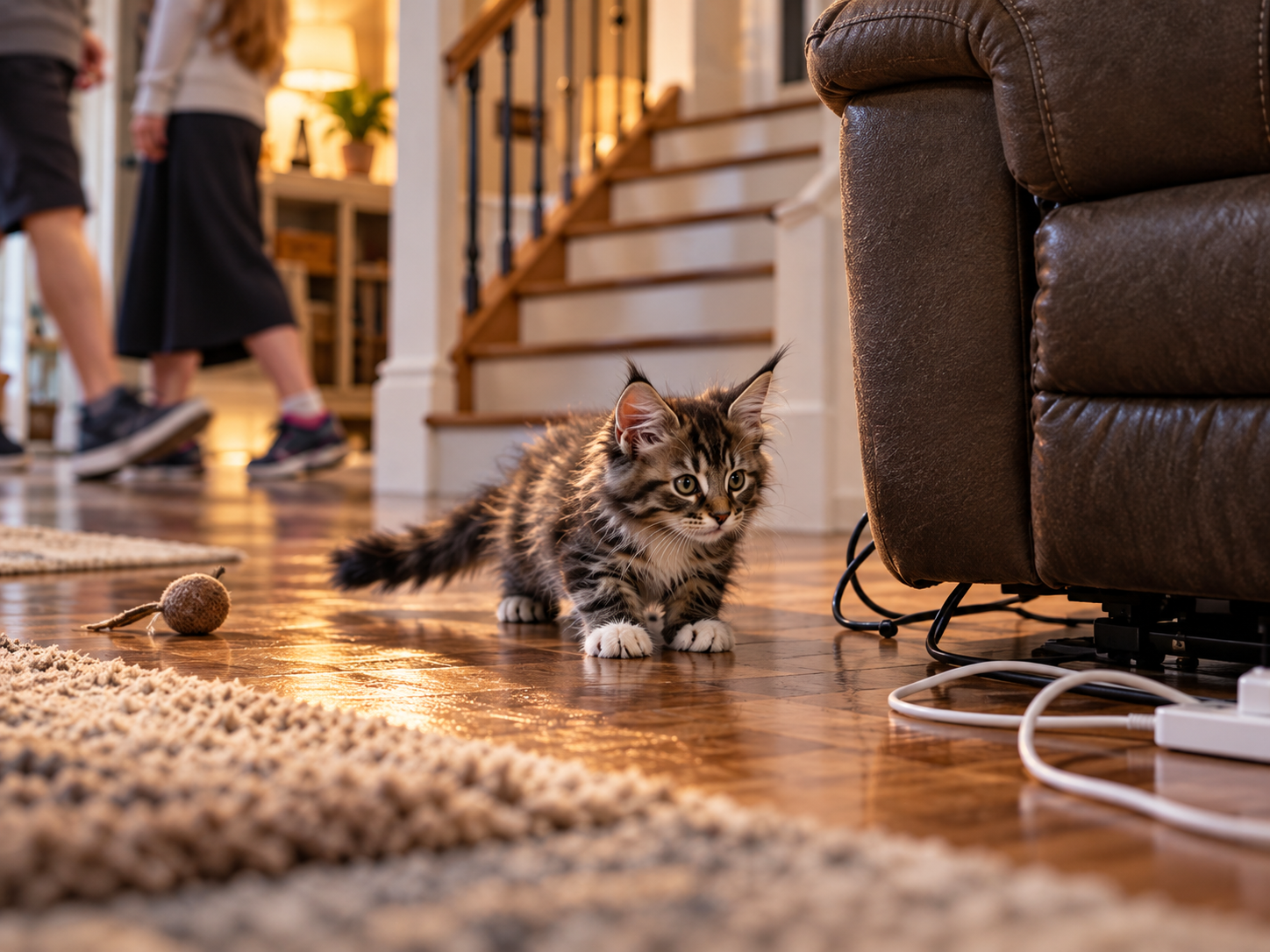
There is also a very real physical safety side to this conversation. Not every house is designed for tiny kittens to freely explore, and ordinary household items can become serious hazards when you are dealing with babies who are curious, fast, and small enough to fit into places we would never think twice about.
Stairs, ledges, recliners, doors, furniture, cords, small spaces, children running through the house, and people simply not realizing a kitten is underfoot can all create risks. I distinctly remember seeing a breeder post about one of their kittens getting caught underneath a recliner and losing its tail. It was a horrible accident, and I do not share that to criticize that breeder. Accidents happen in loving homes every day.
What stayed with me was how quickly something completely ordinary became life-changing for a tiny kitten. A recliner is simply a piece of furniture to us, but to a kitten it can become dangerous in seconds. My own home is multi-level, with stairs, ledges, and areas that simply are not appropriate for very young kittens to roam freely. Combine that with eight children, their friends coming and going, and the licensing requirements I am responsible for following, and having kittens constantly underfoot throughout my home would not be the safest choice for them.
There is also a very real physical safety side to this conversation. Not every house is designed for tiny kittens to freely explore, and ordinary household items can become serious hazards when you are dealing with babies who are curious, fast, and small enough to fit into places we would never think twice about.
Stairs, ledges, recliners, doors, furniture, cords, small spaces, children running through the house, and people simply not realizing a kitten is underfoot can all create risks. I distinctly remember seeing a breeder post about one of their kittens getting caught underneath a recliner and losing its tail. It was a horrible accident, and I do not share that to criticize that breeder. Accidents happen in loving homes every day.
What stayed with me was how quickly something completely ordinary became life-changing for a tiny kitten. A recliner is simply a piece of furniture to us, but to a kitten it can become dangerous in seconds. My own home is multi-level, with stairs, ledges, and areas that simply are not appropriate for very young kittens to roam freely. Combine that with eight children, their friends coming and going, and the licensing requirements I am responsible for following, and having kittens constantly underfoot throughout my home would not be the safest choice for them.
EXPERIENCE CHANGES THE PRECAUTIONS YOU TAKE
Some precautions can look unnecessary until you have lived through the reason they exist. A contagious illness, parasite exposure, or other health event can move through a group of animals incredibly quickly, and once you have experienced that firsthand, the way you think about biosecurity changes.
Experience has taught me that preventing an exposure is far easier than trying to contain one after it happens. Many of the protocols I follow today are not there because I want kitten raising to feel less personal. They are there because I have learned how quickly one seemingly harmless exposure can affect an entire breeding program.
Breeding long enough teaches you that some of the least glamorous parts of the job are also some of the most important. Quarantine, separation, cleaning protocols, controlled traffic, and careful observation may not make exciting social media content, but they can protect an entire group of animals.
SOCIALIZATION DOES NOT REQUIRE FREE ROAM
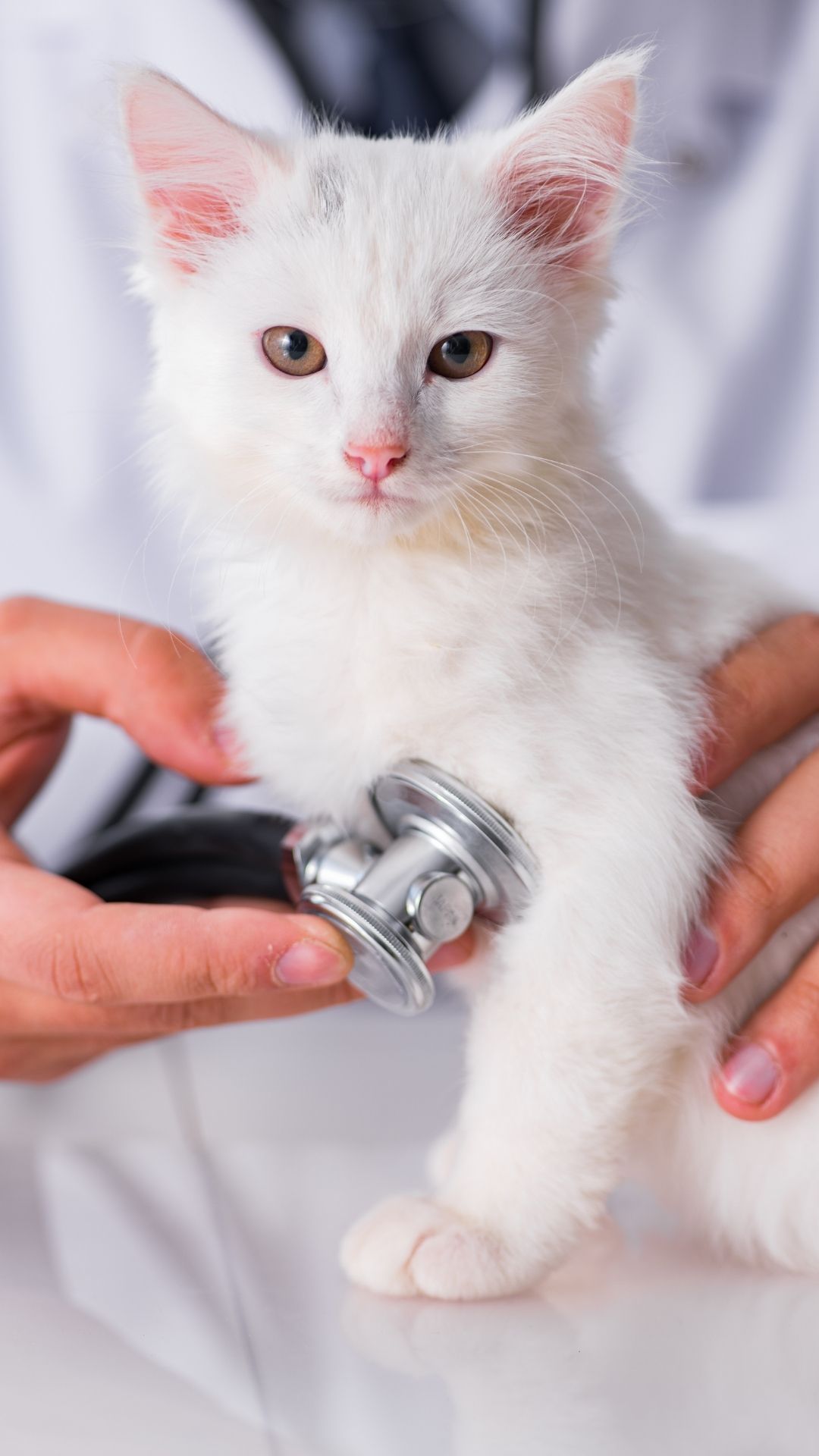
One misconception I think is especially important to address is the idea that kittens must have unlimited access to a household in order to be well socialized. They do not. Kittens need positive human interaction, handling, play, new experiences, sounds, movement, affection, and opportunities to build confidence, but they also need safety.
Those two things can exist together. I know my kittens individually. I know which ones are confident and which ones need a little encouragement, which ones want to be carried everywhere, which ones would rather chase a toy, which ones are independent, which ones are little troublemakers, and which ones would happily crawl into your shirt and stay there.
They are handled, talked to, played with, cuddled, observed, groomed, and exposed to normal life in ways that are appropriate for their age. That is socialization. Socialization is not determined by whether a kitten has access to every room of someone’s house or how many people pass through their environment every day.
There are also breed differences to consider. Some breeds are naturally more reserved or cautious and may require much more intentional socialization, while others tend to be naturally confident and people-oriented. There is no single formula that applies to every breed, every litter, or every individual kitten.
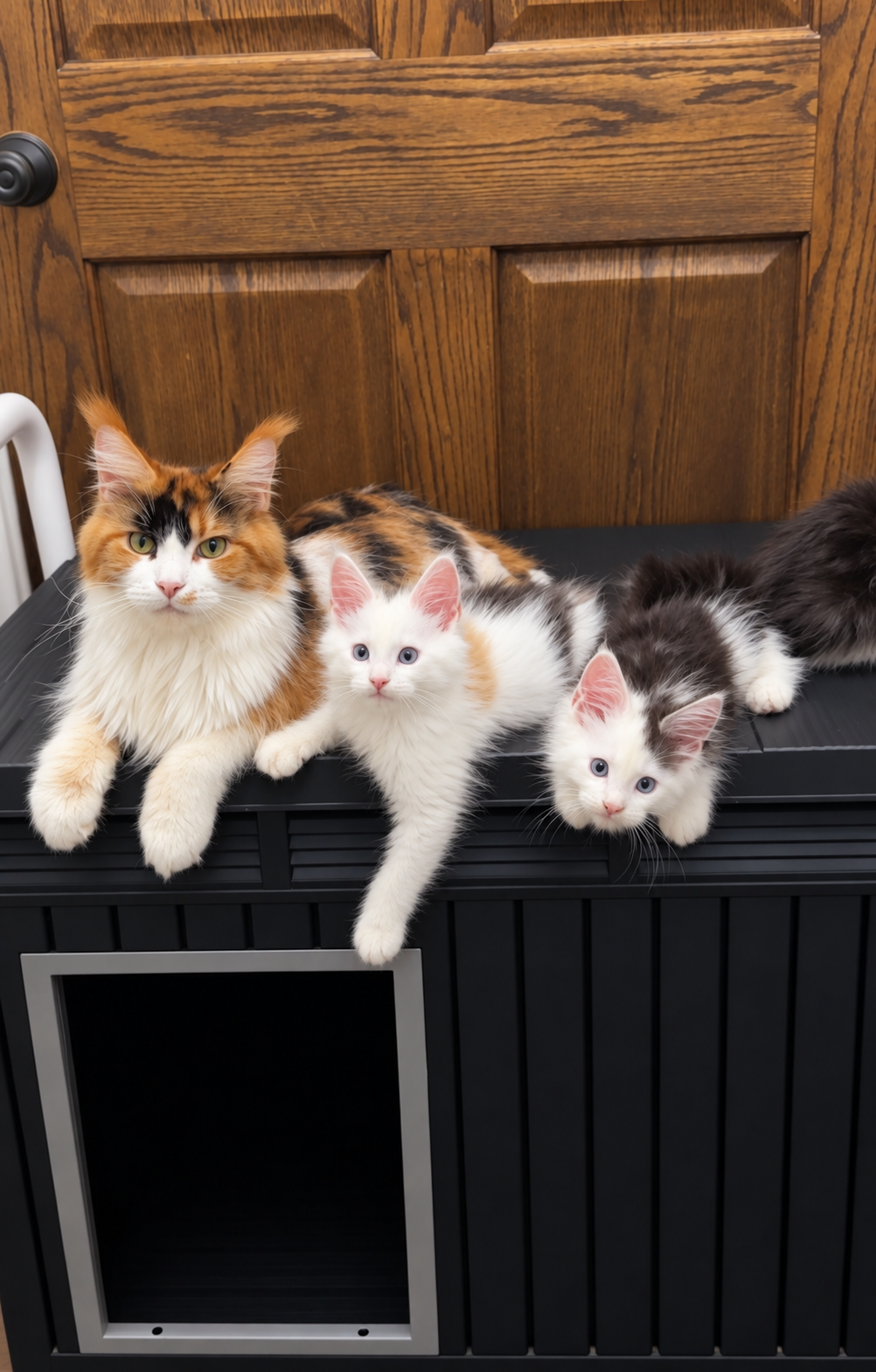
One misconception I think is especially important to address is the idea that kittens must have unlimited access to a household in order to be well socialized. They do not. Kittens need positive human interaction, handling, play, new experiences, sounds, movement, affection, and opportunities to build confidence, but they also need safety.
Those two things can exist together. I know my kittens individually. I know which ones are confident and which ones need a little encouragement, which ones want to be carried everywhere, which ones would rather chase a toy, which ones are independent, which ones are little troublemakers, and which ones would happily crawl into your shirt and stay there.
They are handled, talked to, played with, cuddled, observed, groomed, and exposed to normal life in ways that are appropriate for their age. That is socialization. Socialization is not determined by whether a kitten has access to every room of someone’s house or how many people pass through their environment every day.
There are also breed differences to consider. Some breeds are naturally more reserved or cautious and may require much more intentional socialization, while others tend to be naturally confident and people-oriented. There is no single formula that applies to every breed, every litter, or every individual kitten.
WHEN A FAMILY RESERVES A KITTEN, THEY ARE TRUSTING ME
This is probably the part that matters most to me. When a family places a deposit on one of my kittens, they are trusting me with a baby they are already beginning to think of as theirs. They are trusting me to keep that kitten as safe and healthy as I possibly can until the day I place that baby into their arms.
I take that responsibility incredibly seriously. My job during those weeks is not to create the most picturesque version of breeding for social media. My job is to protect them, care for them, socialize them appropriately, monitor them closely, and make decisions based on what is actually best for the kittens in front of me.
Sometimes that means limiting exposure. Sometimes it means separating litters, prioritizing sanitation over convenience, or following rules another breeder in another state may not have to follow. Sometimes it simply means recognizing that my own family home is not the safest place for tiny kittens to be freely underfoot. None of those decisions mean the kittens are loved any less.
CUTE IS NOT A CREDENTIAL
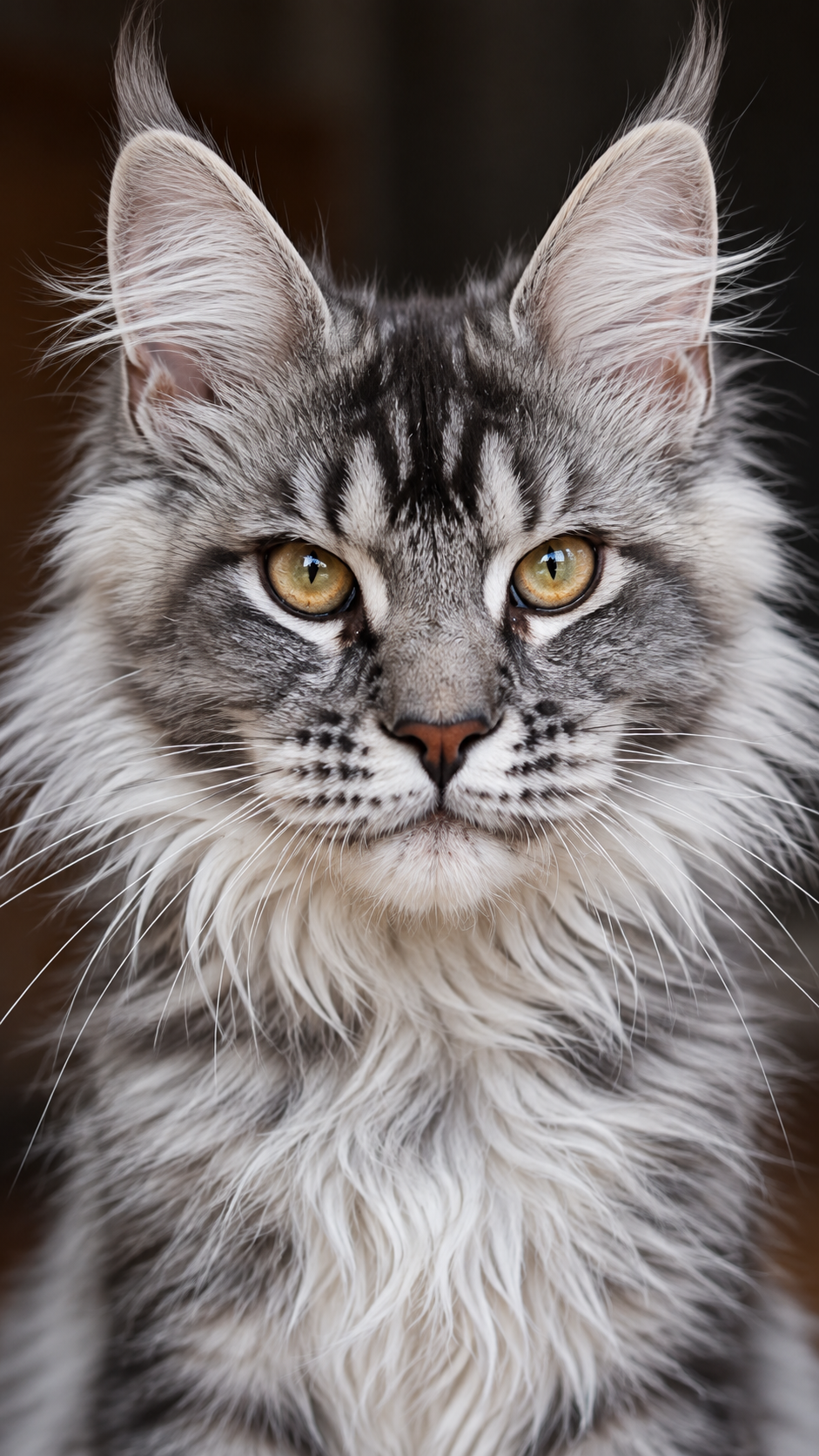
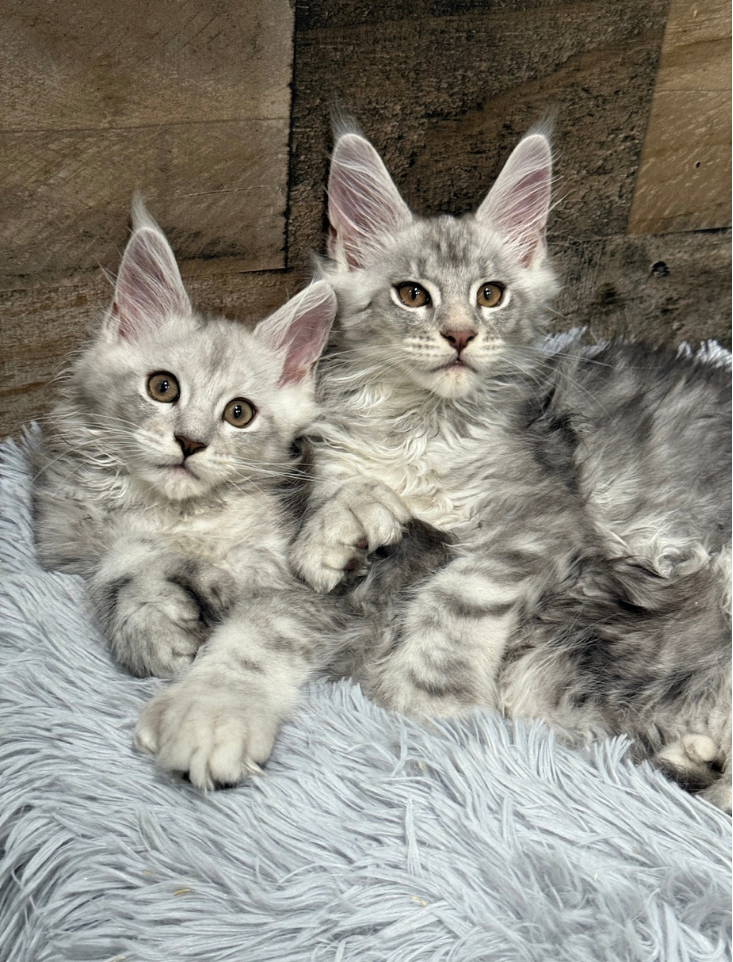
Social media is very good at showing the parts of breeding that photograph well. A kitten sleeping in a bed is adorable. A child carrying a kitten is adorable. A litter running across the living room is adorable. There is nothing wrong with any of those things, but those images cannot tell you everything that matters.
They do not tell you whether breeding cats are health tested, what happens if illness enters the program, whether sanitation protocols exist, whether kittens receive appropriate veterinary care, how closely they are monitored, whether regulations are being followed, or whether that breeder will still answer the phone and support a family months or years after the kitten leaves.
Those things may not make the cutest social media content, but they are still incredibly important parts of responsible breeding.
Social media is very good at showing the parts of breeding that photograph well. A kitten sleeping in a bed is adorable. A child carrying a kitten is adorable. A litter running across the living room is adorable. There is nothing wrong with any of those things, but those images cannot tell you everything that matters.
They do not tell you whether breeding cats are health tested, what happens if illness enters the program, whether sanitation protocols exist, whether kittens receive appropriate veterinary care, how closely they are monitored, whether regulations are being followed, or whether that breeder will still answer the phone and support a family months or years after the kitten leaves.
Those things may not make the cutest social media content, but they are still incredibly important parts of responsible breeding.
DIFFERENT DOES NOT MEAN WRONG
None of this is meant to criticize breeders who safely raise kittens throughout their homes. If that works for their family, their home, their program, and the regulations they are required to follow, that is perfectly fine. There are wonderful breeders who do things very differently than I do, and their choices do not invalidate mine any more than mine invalidate theirs.
There are wonderful small breeders, wonderful larger breeders, breeders with quiet homes, breeders with busy families, and breeders operating under very different legal and practical circumstances. There is no single floor plan, household size, number of cats, or daily routine that automatically creates a good breeder.
What works beautifully for one breeder may be completely inappropriate for another, and that is exactly why I do not believe one person’s setup should ever be presented as the definition of what every responsible breeder should look like.
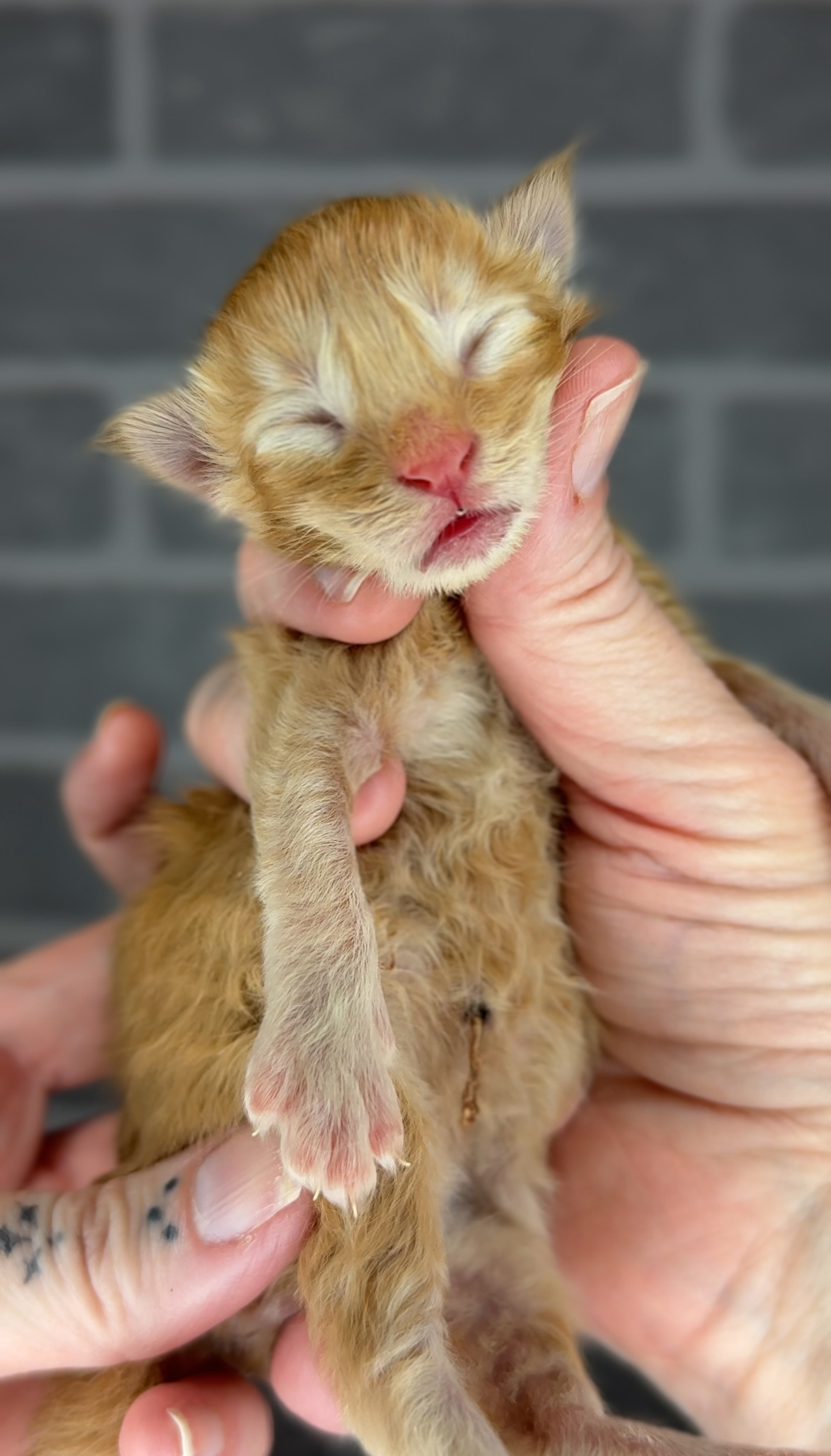
THE QUESTION I ASK MYSELF
For me, every decision eventually comes back to one question: What is safest, healthiest, and most appropriate for the kittens in my care?
That question matters more to me than what looks best in a photograph, what receives the most likes, or what another breeder is able to do in a completely different household. I have to make decisions based on the kittens in front of me, the family I actually have, the environment I actually live in, the experiences I have had, and the licensing standards I am required to follow.
Until the day your kitten goes home with you, keeping that baby safe is my responsibility, and that is a responsibility I take very seriously.